
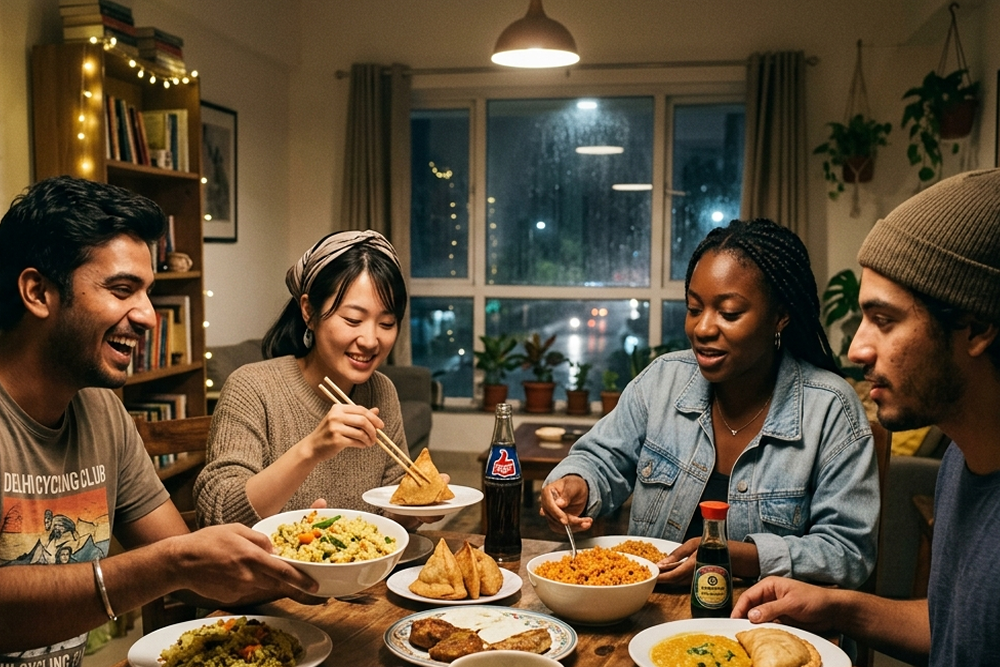
There is something universally comforting about sitting down to a home-cooked meal. Long before we had translator apps, social media feeds, or global group chats, breaking bread together was the original way humans built trust across different cultures.
For today’s young adults, students living in international dorms, and young professionals sharing co-living spaces, this ancient tradition is making a massive comeback.
Instead of meeting at loud, expensive restaurants where you can barely hear each other talk, Gen Z is leaning into a warm, low-budget alternative: The International Culture-Swap Potluck.
What Is a Culture-Swap Potluck?
Unlike a standard dinner party where one host cooks everything, an international potluck has one simple rule: Everyone brings a dish from their hometown, family heritage, or favorite culture.
It isn’t about professional cooking skills or fancy plating. Whether it’s a quick 10-minute street food snack, a cozy bowl of family-recipe lentils, or a simple dessert bought from a local ethnic bakery, the food acts as an icebreaker.
When you bring a dish to the table, you aren’t just sharing food you’re sharing a piece of your childhood, your family memories, and your roots.
Why Food Breaks Cultural Barriers Faster Than Small Talk
If you’ve ever found yourself in a room with people from different countries or states, small talk can sometimes feel stiff. You worry about language barriers, saying the wrong thing, or running out of topics.
Food changes the entire energy of the room for three key reasons:
1. It Tells a Personal Story
When someone asks, “What is this dish called?”, the answer is rarely just a list of ingredients. It usually comes with a story:
“My grandmother used to make this every time it rained.”
“This is the late-night street food everyone eats after college exams in my city.”
Suddenly, without any social pressure, you learn about someone’s history, family, and hometown culture naturally.
2. It Highlights How Much We Have in Common
One of the coolest discoveries at a cross-cultural potluck is realizing how every culture shares similar comfort foods.
India has Samosas, Argentina has Empanadas, and Poland has Pierogies.
Japan has Gyoza, Nepal has Momos, and Italy has Ravioli.
Seeing these culinary connections sparks instant laughter and reminds everyone that despite living thousands of miles apart, human comfort cravings are strikingly similar.
3. It’s Inclusive and Wallet-Friendly
For college students and young professionals on a budget, eating out at global cuisine restaurants can be pricey. A potluck keeps costs low while allowing everyone to sample ten different dishes in one evening.
3 – Easy Rules to Host Your First Culture-Swap Dinner
Want to organize a potluck with your flatmates, international classmates, or co-workers? Keep these three guidelines in mind:
Keep the Setup Informal: Put cushions on the floor, play a shared collaborative playlist, and let people serve themselves buffet-style.
Label Dietary Needs: Make sure people write a quick card listing ingredients (like vegetarian, vegan, nuts, or halal) so everyone can eat worry-free.
Ask the “Story Question”: Before everyone digs in, have each person share a 30-second memory tied to the food they brought.
You don’t need a passport or an expensive flight ticket to experience the world. Sometimes, all it takes to cross borders and make lifelong international friends is a single dish shared around a table.
– Aira 🌿